The Toronto Community Neighbourhood Guide

Smart real estate strategies for families, commuters, and investors moving to Pickering, Ajax, Whitby, Oshawa, and Clarington.

Key TakeAways

  • Premium Location & Vertical Growth: Features a high-density landscape of modern high-rise condos, vertical communities, and luxury historic pockets.
  • Integrated TTC Subway Grid: Exceptional walkability and 24/7 public transit connectivity powered by the subway network, streetcars, and the GO Transit hub at Union Station.
  • Diverse Cultural & Business Hubs: Combines a global financial center with unique, highly distinct cultural neighborhoods and world-class entertainment districts.
  • Elite Institutional Infrastructure: Home to Canada’s top-ranked research universities, massive hospital networks, and highly competitive specialty public and private school catchments.

The Real Estate Blueprint Of The Toronto Urban Core

Toronto real estate offers a diverse housing mix for global professionals, investors, and families seeking premium urban proximity. This vibrant landscape ranges from modern, high-rise transit communities to highly coveted historic brick-and-beam homes. The market delivers resilient long-term appreciation, driven by rapid vertical development and massive transit expansions like the Ontario Line subway, offering distinct neighborhood choices across the city’s core.
Open in Maps ↗

Loading map…

Toronto boundary: Statistics Canada, 2021 Census Division Cartographic Boundary File (Statistics Canada Open Licence). Simplified for web display; not survey-accurate.
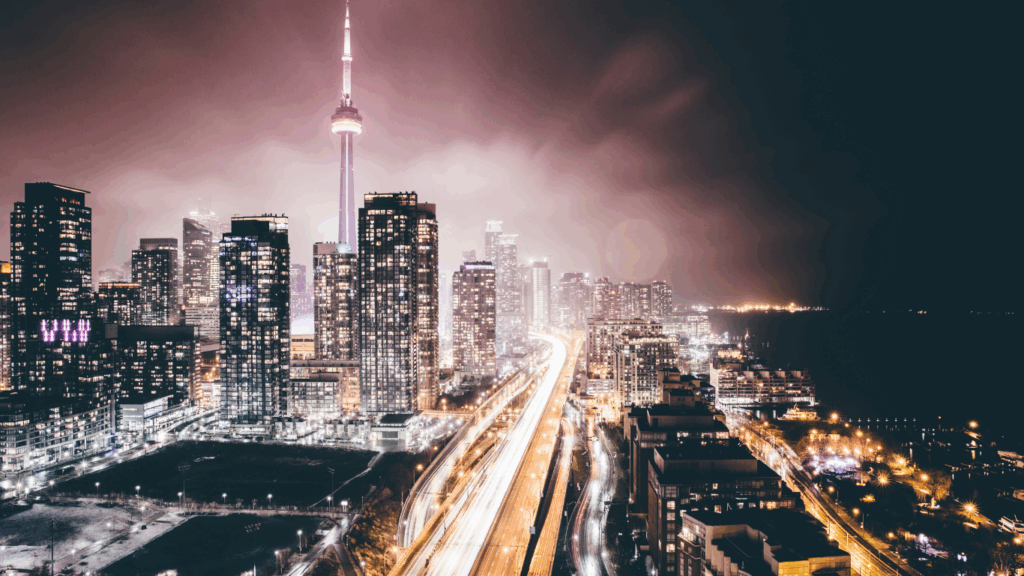

1. Top-Tier Global Liveability & Public Safety

Unlike many ultra-dense international metropolises, Toronto successfully combines massive economic infrastructure with an exceptionally safe, clean, and stable urban environment.
 
  • The Index Rankings: Toronto consistently secures a top position on the EIU (Economist Intelligence Unit) Global Liveability Index and various international safety reports.
  • The Real Estate Impact: Global buyers choose Toronto because they can purchase premium residential real estate inside a highly stable, low-crime democratic environment. The city’s pristine urban ravine networks, clean public parklands, and walkable neighborhood blocks make it highly attractive for families looking to raise children in a secure environment.

2. A Massive, Recession-Resilient Economic Core

Toronto is the undisputed financial, technological, and industrial engine of Canada, serving as the secondary largest financial sector in North America after New York City.
 
  • The Career Ecosystem: The city hosts the global headquarters of Canada’s primary banking institutions, massive multinational corporate offices, and a booming tech innovation hub.
  • The Real Estate Impact: This high concentration of high-paying jobs creates a deep, incredibly liquid rental and purchase market. Corporate professionals and tech specialists moving from tech hubs in Europe, Asia, and the Silicon Valley look to Toronto because it guarantees long-term career growth and shields their property assets with robust local economic insulation.

3. World-Class Educational Infrastructure

For international families, the ultimate return on a real estate investment is securing top-tier education for their children. Toronto delivers a highly accessible, world-renowned dual academic framework.
  • Post-Secondary Flagships: The city is anchored by elite research and academic institutions, led by the University of Toronto (U of T), Toronto Metropolitan University (TMU), and York University.
  • Primary & Secondary Excellence: The local public and separate school catchments—governed by the Toronto District School Board (TDSB) and Toronto Catholic District School Board (TCDSB)—provide standard, globally recognized curricula. This immense educational weight forces intense, permanent bidding pressure on freehold homes situated inside top-ranked school zones.

The Official Toronto Neighbourhood Index by District

The City of Toronto utilizes a standardized municipal planning framework that divides its expansive urban landmass into four administrative districts containing 158 official planning neighbourhoods. This structured index serves as the foundational architecture for municipal resource allocation, demographic profiling, and localized housing inventory tracking.
  • 158 Planning Neighbourhoods: The complete geographical division system implemented by Toronto City Planning.
  • 4 Administrative Districts: Grouped into Toronto & East York, North York, Etobicoke, and Scarborough directories.
  • Standardized Boundary Data: Eliminates loose real estate marketing terminology in favor of precise municipal borders.
  •  Semantic Data Matrix: Organizes high-density urban high-rises away from low-density single-family suburban subdivisions.

Master District Distribution

1. Toronto & East York District (South Core)

Comprises high-density vertical condominium lines, historic character enclaves, and premium walkable neighborhoods framing the financial district and the Lake Ontario waterfront.
    • Key Sectors: The Waterfront Communities, Financial District, Leslieville, The Beaches, Rosedale, The Annex, Leaside, and Old East York.

2. North York District (North Core)

Balances major commercial employment corridors and high-density transit-oriented high-rises along the Yonge Street spine with mature, low-density single-family family estates.
    • Key Sectors: Willowdale, Bayview Village, Lawrence Park North, Bridle Path-Sunnybrook-York Mills, Banbury-Don Mills, and Downsview.

3. Etobicoke District (West Core)

Acts as the prestigious western gateway to the municipality, focusing heavily on master-planned greenbelt expansions, luxury ravine estates, and transit-adjacent lakeside condo hubs.
    • Key Sectors: The Kingsway, Princess-Rosethorn, Humber Bay Shores, Mimico, Islington-City Centre West, and Markland Wood.

4. Scarborough District (East Core)

Encompasses the expansive eastern frontier of the city, delivering vast natural park spaces, major institutional employment centers, and low-density residential subdivisions.
  • Key Sectors: Clairlea-Birchmount, Birchcliff-Cliffside, Agincourt, Wexford-Maryvale, Guildwood, West Hill, Malvern, and Rouge.
downtown-toronto-at-night
Toronto & East York District (South Core)
  • The Waterfront Communities
  • Financial District
  • Bay Street Corridor
  • Church-Yonge Corridor
  • Moss Park
  • Cabbagetown-South St. James Town
  • Regent Park St. James Town
  • North St. James Town
  • Yonge-St. Clair
  • Rosedale-Moore Park
  • Casa Loma
  • Yonge-Eglinton
  • Mount Pleasant West
  • Mount Pleasant East
  • Lawrence Park South
  • The Annex
  • Palmerston-Little Italy
  • University
  • Kensington-Chinatown
  • Trinity-Bellwoods
  • Niagara
  • Waterfront Communities West
  • South Riverdale
  • Leslieville
  • Riverside
  • The Beaches
  • Woodbine Corridor
  • Greenwood-Coxwell
  • Blake-Jones
  • Danforth
  • Playter Estates-Danforth
  • North Riverdale
  • Broadview North
  • Leaside-Bennington
  • Thorncliffe Park
  • Flemingdon Park
  • East York Old Core
  • O’Connor-Parkview
  • Woodbine-Lumsden
  • Danforth East York
downtown-toronto-at-night
North York District (North Core)
  • Willowdale East
  • Willowdale West
  • Lansing-Westgate
  • Newtonbrook East
  • Newtonbrook West
  • Bayview Village
  • Bayview Woods-Steeles
  • Hillcrest Village
  • Don Valley Village
  • Pleasant View
  • Henry Farm
  • St. Andrew-Windfields
  • Bridle Path-Sunnybrook-York Mills
  • Lawrence Park North
  • Bedford Park-Nortown
  • Clanton Park
  • Bathurst Manor
  • Englemount-Lawrence
  • Yorkdale-Glen Park
  • Maple Leaf
  • Pelmo Park-Humberlea
  • Downsview-Roding-CFB
  • Glenfield-Jane Heights
  • Black Creek
  • Humbermede
  • Humber Summit
  • Banbury-Don Mills
  • Victoria Village
  • Parkwoods-Donalda
downtown-toronto-at-night
Southwest Scarborough (The Lakeshore & Commuter Tier)
  • Birchcliffe-Cliffside
  • Clairlea-Birchmount
  • Cliffcrest
  • Ionview
  • Kennedy Park
  • Oakridge
  • Wexford-Maryvale
  • Dorset Park
Northwest Scarborough (The Northern Transit Artery)
Agincourt North
  • Agincourt South-Malvern West
  • Milliken
  • L’Amoreaux
    Tam O’Shanter-Sullivan
    Steeles
Central & East Scarborough (The Civic & Institutional Core)
  • Bendale
  • Woburn
  • Morningside
  • Eglinton East
  • Scarborough Village
Southeast & Northeast Scarborough (The Estate & Greenbelt Tier)
  • Guildwood
  • West Hill
  • Highland Creek
  • Centennial Scarborough
  • Malvern
  • Rouge
downtown-toronto-at-night
Etobicoke District (West Core)
 
  • The Kingsway
  • Princess-Rosethorn
  • Edenbridge-Humber Valley
  • Islington-City Centre West
  • Stonegate-Queensway
  • Mimico
  • New Toronto
  • Long Branch
  • Alderwood
  • Markland Wood
  • Eringate-Centennial-West Dean
  • Etobicoke West Mall
  • Princess-Rosethorn
  • Kingsview Village-The Westway
  • Willowridge-Martingrove-Richview
  • Humber Heights-Westmount
  • West Humber-Clairville
  • Mount Olive-Silverstone-Jamestown
  • Thistletown-Beaumond Heights
  • Rexdale-Kipling
  • Elms-Old
  • Rexdale
  • Kingsview Village
  • Humbermede West
  • Humber Bay Shores